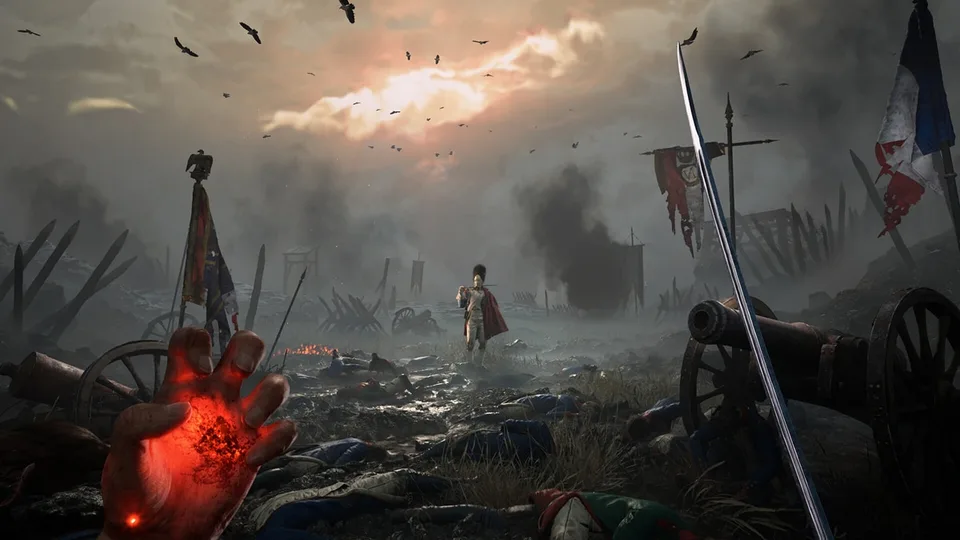
Valor Mortis Engine: How Unreal Engine 5 Powers One More Level's Soulslike
Discover how developer One More Level leverages Unreal Engine 5 technologies like Lumen, Nanite, and World Partition to build the supernatural action Soulslike Valor Mortis.
Published: Valor Mortis Wiki Editorial Team
Video Guide
Valor Mortis | Developer Interview | Unreal EngineTable of Contents
Introduction to Valor Mortis and Its Engine Architecture
When developer One More Level announced their shift to Unreal Engine 5 for their upcoming supernatural action Soulslike Valor Mortis, it marked a significant evolution for the studio. Having previously spent over a decade crafting titles like Deadlings, God’s Trigger, and the high-speed cyberpunk parkour hits Ghostrunner and Ghostrunner 2 using Unreal Engine 4, transitioning to UE5 was a natural progression.
The primary driver behind this technological leap was the studio's deep familiarity with the UE4 ecosystem. Moving to UE5 allowed the Kraków-based team to retain their foundational knowledge while tapping into modern, out-of-the-box tools designed to streamline production pipelines and scale up world-building capabilities. According to Technical Director Krzysztof Dalton Pachulski, utilizing UE5’s source code access and advanced asset management systems has been essential for optimizing performance across both PC and console platforms.
For a project of this scale—depicting an alternate 19th-century Europe where a former soldier of Napoleon’s army rises from death—having a robust engine backbone is crucial. The team leverages custom device profiles, the Gameplay Ability System (GAS), and advanced asset managers to handle complex combat mechanics and dense environments without compromising framerates.
Overcoming World-Building Bottlenecks with World Partition
Designing large, immersive environments historically introduced significant workflow bottlenecks for development teams. During the production of Ghostrunner, One More Level encountered challenges with stream-handling solutions that required manual intervention.
To solve this for Valor Mortis, the team implemented Unreal Engine 5's World Partition feature. Although the game is not a traditional open-world title, World Partition revolutionized their internal workflows by eliminating the need to excessively slice up levels and lose spatial context.
How World Partition Improves UE5 Development Workflows
Unified Space: Developers can work within complete, continuous environments rather than fragmented sub-levels.
File-per-Actor Structure: Utilizing "one file per actor" and data layers ensures that multiple team members can modify the world simultaneously without overwriting data conflicts.
In-Editor Streaming: Built-in streaming tools automatically manage asset loading and unloading, keeping memory overhead manageable during active development.
By adopting this system, the environment artists and level designers could construct dense, interconnected areas inspired by Metroidvania design principles while keeping development time efficient.
Achieving Atmospheric Realism Through Lumen and Niagara
One of the standout design pillars of Valor Mortis is its distinct visual tone, heavily inspired by 19th-century paintings and historical artwork. To translate this bleak, supernatural atmosphere into real-time gameplay, the studio relied heavily on UE5's dynamic lighting and particle frameworks.
Lumen Global Illumination
Lighting plays a vital role in setting the moody, oppressive tone of the game's alternate historical setting. Instead of relying on traditional, time-consuming light baking processes, the team utilized Lumen for real-time global illumination.
Tip
Why Lumen Matters for Dark Fantasy: Lumen allows developers to automatically illuminate overly dark or enclosed interior spaces and dynamically cast light through heavy fog and mist effects, maintaining a consistent atmosphere without the overhead of manual light map baking.
Niagara Particle Effects and Material Detail
Particle systems powered by Niagara provide natural-looking environmental effects—such as floating embers, dense fog, and smoke—without causing massive performance spikes. Furthermore, the team incorporated advanced post-processing materials and dynamic clothing systems. These subtle background details convey environmental storytelling elements that players might not consciously notice, yet they fundamentally enhance immersion.
Streamlining Combat and Character Animation
Developing a dynamic, first-person Soulslike combat system presents unique design challenges compared to traditional third-person perspectives. In a first-person view, camera boundaries and screen space restrictions require careful tuning to ensure players always maintain spatial awareness during frantic melee engagements.
One More Level addressed this by heavily utilizing the Gameplay Ability System (GAS). This framework allowed programmers to build robust underlying logic structures while granting designers the flexibility to iterate on combat behaviors, enemy reactions, and player skills without getting bogged down in low-level code.
Core Development Tools
Gameplay Ability System (GAS)
Empowers designers to independently tweak combat timing, behaviors, and skill parameters within a stable programmatic framework.
MetaHumans & Custom Animation
Leverages advanced character creation tools and precise clothing physics to ensure realistic movement and dynamic interaction during intense supernatural battles.
Additionally, character animations and facial rigging benefit from technologies like MetaHumans, ensuring that historical figures, allied commanders, and terrifying monsters look and move with high fidelity.
Conclusion and Next Steps
The technical foundation established by Unreal Engine 5 allows One More Level to push the boundaries of what a supernatural action Soulslike can achieve. By combining modern pipeline features like World Partition, Lumen, and Niagara with an experienced development team, Valor Mortis is shaping up to deliver a visually striking and mechanically deep experience when it launches on PC and consoles in 2026.
If you want to track the game's progress closer to launch, you can check out the official Valor Mortis Steam Page or visit valormortis.game for developer insights and future updates.