Valor Mortis Map and Navigation Guide: Mastering the First-Person Soulslike
Discover how to navigate Valor Mortis without an end-game map, master first-person Soulslike exploration, and conquer linear level design.
Published: Valor Mortis Wiki Editorial Team
Table of Contents
Understanding Valor Mortis Level Design and Map Limitations
When diving into a first-person Soulslike set in an alternate Napoleonic era, one of the first things veteran players notice is the absence of an in-game mini-map or comprehensive end-game world map. According to community reports and player experiences, the level design is intentionally linear yet structured with tight corridors, verticality, and hidden shortcuts reminiscent of classic action-adventure loops. Because there is no dedicated map screen to check your coordinates, mastering your surroundings depends heavily on environmental storytelling and spatial memory.
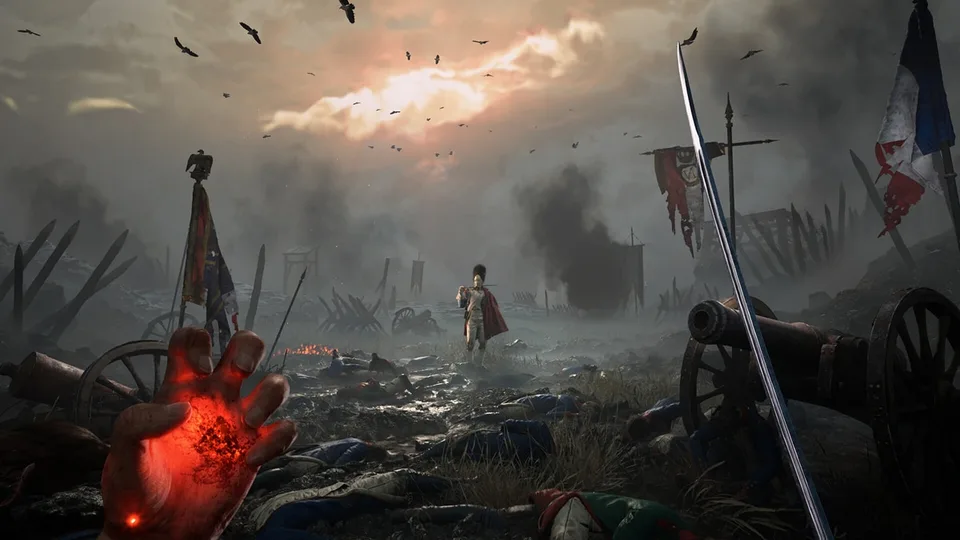
The development team, One More Level—known for their work on Ghostrunner—built the world around first-person speed, precision, and vertical movement. Players must physically memorize shortcuts, landmark structures, and checkpoint locations. If you find yourself turned around in the fog-drenched, gray-and-brown battlefields of the early chapters, you are not alone. Transitioning later into stone villages, dense forests, and snowy zones helps improve visual readability, but spatial awareness remains your primary navigation tool.
Traversal Mechanics: How to Navigate Without a Map
Identify Handholds and Ledges: Look for interactable architectural elements where William can latch onto ledges, swing across branches, and scale vertical surfaces using fluid first-person animations.
Utilize Supernatural Mobility: Leverage abilities granted by the Nephtoglobin plague to clear corrupted growths that block specific pathways and open up new exploration routes.
Memorize Bonfire-Style Checkpoints: Treat each safe zone or checkpoint as a central anchor point, mapping out short loops before pushing deeper into unknown enemy territory.
Watch for Environmental Cues: Pay attention to lighting, architectural contrasts, and distinct terrain changes (such as shifting from muddy trenches to stone-paved villages) to track your progress through linear stages.
Navigation in a title without a traditional map requires treating every zone as a spatial puzzle. Players must actively look up and around rather than staring at the ground. The integration of platforming elements means that vertical spaces often hide vital upgrade materials, alternate weapon paths, or shortcuts back to earlier checkpoints. However, community feedback highlights that first-person jumping can occasionally trigger motion sickness or prove tricky when judging exact distances. Keeping your movements deliberate and utilizing the environment for stealth or surprise critical strikes will keep you oriented even in dense combat zones.
Overcoming Visual Readability and Environmental Challenges
One of the most common hurdles players face during the opening hours of Valor Mortis is environmental blending. The early battlefields are draped in heavy fog with a monochromatic palette of grays and browns, causing enemy silhouettes to blend seamlessly into the background. Without a map to guide your eyes, recognizing enemy wind-ups entirely from visual cues requires sharp focus.
To adapt to these visual constraints, rely on audio cues as much as line-of-sight awareness. The game utilizes distinct sound design for enemy attacks, blocking, and parrying. When fighting in tight spaces where larger boss limbs might drift out of your narrow field of view, standard practice involves backing away just enough to keep the entire encounter framed in front of you. Exploring later zones with varied color palettes will naturally alleviate some of these early readability struggles.
Weapon Choices and Their Impact on Exploration
The Dependable Saber
Offers forgiving timing for attacking, blocking, and parrying. It serves as your reliable safety net for general exploration and standard enemy encounters.
The Specialized Rapier
Removes standard blocking mechanics in favor of timing-based defenses, rewarding you with stronger counterattacks and direct access to enemy weak points.
Heavy Cleavers
Built for slower, heavier swings that suit a patient duelist style, changing how you approach crowds and tightly packed corridors.
Your choice of armament directly influences how comfortably you explore and clear linear pathways. Swapping from the versatile saber to specialized weapons changes your engagement range and defensive rhythm. Furthermore, secondary tools such as the pistol, musket, and blunderbuss let you pick off distant targets or exploit enemy weak points before closing the distance for a brutal execution. Balancing your resource management—especially limited ammunition and stamina—ensures you never get caught deep in a linear corridor without a way out.
FAQ
Is there a mini-map or end-game map in Valor Mortis?
No, the game features a linear level design with no end-game map or mini-map. Players must rely purely on spatial memory, environmental landmarks, and checkpoint locations to navigate.
How do I clear blocked paths during exploration?
You need to utilize specific supernatural abilities, such as the fire-based Nephtoglobin power, which burns away corrupted growth blocking certain routes.
Why is navigation difficult in the early chapters?
The early zones feature heavy fog and a strict palette of grays and browns, making it harder to distinguish enemy silhouettes and layout features until you progress into later areas like forests and snow zones.