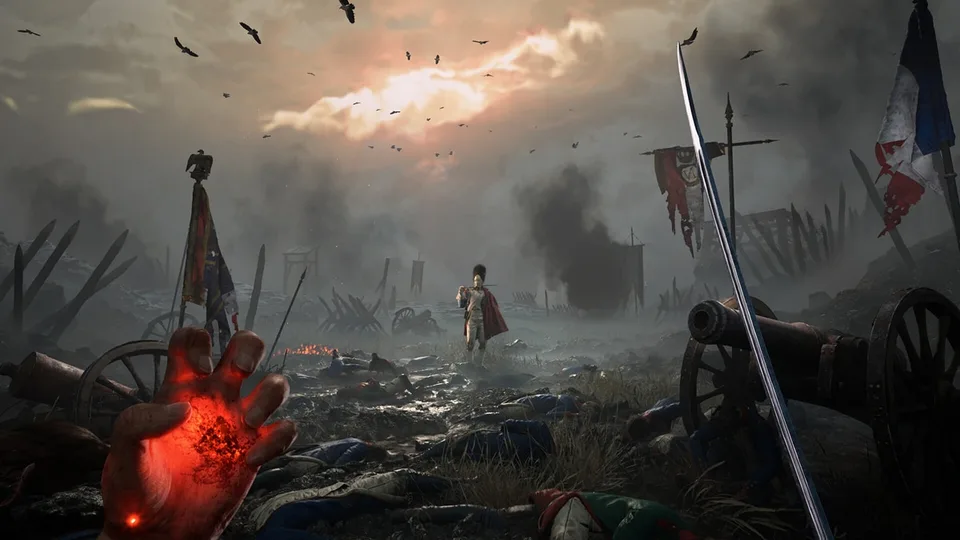
Valor Mortis Steam Overview: First Impressions, Combat, and Game Identity
Discover the latest insights on Valor Mortis on Steam, featuring first-person Souls-like combat mechanics, Napoleonic era setting, and progression systems.
Published: Valor Mortis Wiki Editorial Team
Table of Contents
Introduction to Valor Mortis on Steam
For players tracking the release of Valor Mortis on Steam, developed by One More Level, early impressions from the community reveal a compelling mix of historical fiction and dark fantasy. Moving past earlier trial builds, the full experience brings notable adjustments to movement, control responsiveness, and overall game feel. This guide breaks down what players need to know about its progression loops, combat mechanics, and navigation systems based on recent developer updates and hands-on player reports.
Verify Your Platform: Access the game via its official Steam hub to ensure you are viewing the correct full game entry (App ID: 2828710).
Review Mature Content Settings: Adjust your Steam preferences to view age-restricted store pages featuring intense violence within a war-torn landscape.
Prepare Your Build Strategy: Decide early whether you want to lean into parry-heavy fencing or precision-dodge counters.
Setting and Story Premise
The narrative drops players straight into a dark alternate history during the Napoleonic Wars. You take on the role of a soldier in Napoleon's army who wakes up on a battlefield grave after dying. Rather than a standard historical simulation, a supernatural affliction known as the Crimson Plague is sweeping across the continent, transforming living beings and corpses alike into grotesque monsters.
Tip
Narrative Atmosphere: According to community reports, players absorb strange transmutative powers from fallen entities right at the start, setting up a mysterious journey filled with cryptic alchemists, internal voices, and persistent dark secrets.
Combat Mechanics and Weapon Systems
Combat in Valor Mortis adopts a distinctive first-person Souls-like perspective, focusing heavily on timing, positioning, and resource management. Players wield a sword in one hand while dynamically swapping between firearms and unique transmutation powers in the other.
Parry and Posture System
Focusing on a fencing-style weapon allows you to lean heavily into parries. Successful blocks and parries degrade enemy posture bars, eventually opening them up for devastating counter-attacks.
Precision Dodge Mechanics
Perfectly timed dodges slow down the entire surrounding world temporarily, granting an opening to deliver high-damage retaliations against aggressive foes.
Firearms and Weak Points
Ranged weapons are introduced early in the progression loop. Hitting specific enemy weak points not only deals extra damage but also generates "Neftoglobin," the vital resource required to power your transmutation abilities.
Exploration, Movement, and the Church Hub
Unlike traditional slow-paced action RPGs, Valor Mortis incorporates an impressive degree of verticality and fluid movement mechanics—drawing notable inspiration from the developer's past work on Ghostrunner. Players can utilize wall-running, pole-swinging, and advanced platforming to traverse interconnected environments.
Levels are organized around a central hub known as the church. As you progress, you unlock lantern checkpoints where you can spend collected resources to level up your character directly through skill paths rather than traditional attribute allocation. The world structure also incorporates Metroidvania elements; early areas contain paths you cannot initially navigate until you acquire specific navigational abilities later on, encouraging strategic backtracking.
Utilize lanterns as rest points to invest resources into skills and character progression.
Collect amber pieces and slot them into unlocked slots to customize passive status effects and build synergies.
Upgrade your swords and firearms using materials gathered during exploration at the church workshop.
Frequently Asked Questions
Is Valor Mortis a long game?
Early community reports and hands-on impressions suggest that the game is relatively concise compared to massive open-world titles, prioritizing tight, focused level design and refined combat encounters over excessive length.
How does the game handle off-screen enemies in first-person view?
Because the game's mission structure remains relatively linear during early sections, situations where enemies attack from your blind spots are minimized. Additionally, the game utilizes visual on-screen indicators to warn you when attacks are incoming from behind.
Are there multiple difficulty settings?
Staying true to the Souls-like genre philosophy, the game opts for a singular balanced difficulty while providing players with various mechanical options, loadouts, and defensive playstyles to handle challenging bosses and encounters.