Valor Mortis SteamDB Overview, Combat Mechanics and Pre-Launch Details
Explore Valor Mortis game details, first-person soulslike combat mechanics, developer background from One More Level, and platform availability.
Published: Valor Mortis Wiki Editorial Team
Table of Contents
Understanding Valor Mortis and Its Studio Background
When evaluating a new release, looking at the team behind the project often sets proper expectations. Developed by One More Level—the Polish studio recognized for the fast-paced, high-mobility Ghostrunner series—Valor Mortis represents a significant shift in perspective and pacing. While their previous titles emphasized relentless flow where players died in a single hit and restarted instantly, this project trades vertical mobility for a deliberate, first-person soulslike framework.
According to community reports and hands-on previews, the studio has positioned this release as its most complex and ambitious undertaking to date. The development journey spanned several years, including a public play test that helped refine boss encounters. Rather than relying on traditional pre-order models or early access incentives, the developers chose to omit pre-orders entirely, asserting confidence in the finished product while ensuring all players enter the experience on equal footing.
Combat Mechanics and Resource Management
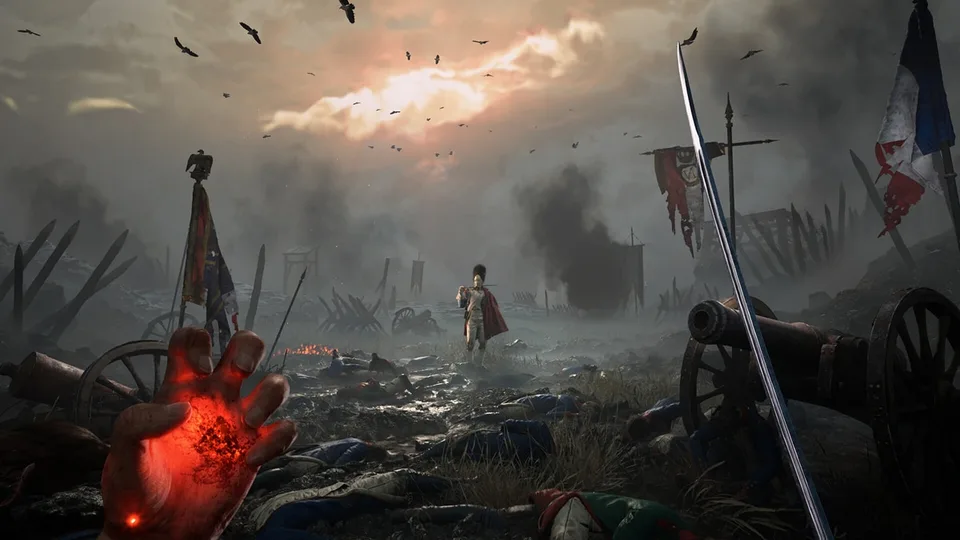
The combat loop of Valor Mortis revolves around managing tightly contested resources and narrow execution windows. Players step into the boots of William, a resurrected British soldier in Napoleon's Grand Army, armed with a cutlass in one hand and a flintlock pistol in the other.
Based on community feedback and preview breakdowns, the combat system relies on several strict constraints:
The Cutlass: Used to block a small chunk of health, dodge unblockable strikes, and execute parries for substantial damage. However, attack animations cannot be canceled, requiring precise timing and patience.
The Flintlock & Magic Slot: The pistol staggers enemies and opens up weak points, but ammunition is heavily rationed. Furthermore, transmutations (flame-based palm attacks) share the exact same slot as the pistol, forcing players to choose between ranged firearm utility or offensive magic during intense encounters.
Progression and Penalties: Checkpoints are anchored by lanterns where players spend catalysts to upgrade health, stamina, and core stats. Upon death, accumulated catalysts drop directly on the ground where the player fell, adhering to classic soulslike survival rules.
Notably, the game features no traditional equipment system. There are no weapon drops or armor pieces to collect, meaning the skill tree carries the entire weight of character builds.
Platform Availability, Pricing, and Trial Options
For players deciding how to approach the title, platform-specific options alter the traditional purchasing decision. On PC, PlayStation 5, and Xbox Series, the standard retail price is set at $40.
However, accessibility is streamlined through alternative launch strategies:
Game Pass Ultimate: The game arrives on Game Pass Ultimate on day one, allowing subscribers to jump in without an upfront purchase.
PlayStation Trial: PlayStation 5 owners have access to a 90-minute trial period, with all progress carrying over if they decide to purchase the full game afterward.
Deluxe Editions: While base pre-orders were avoided, a deluxe edition is available for an additional $20, which bundles cosmetic items and a scheduled story expansion planned for the year following release.
Managing Opening Chapter Expectations
One of the most recurring discussions in preview write-ups involves the pacing of the game's opening hours. Community reports and critic write-ups highlight a noticeable contrast between the initial chapter and the mid-game sections.
The opening segment has occasionally been critiqued for linear map design and predictable enemy encounters. Conversely, players and reviewers who progressed into the middle chapters noted a significant uptick in momentum, larger traversal areas, and much more dynamic combat scenarios. Because the studio briefly took down its initial preview build before launch, players diving in on day one will experience a polished version that has evolved past those early media hands-on builds.
For those interested in exploring the official store page or verifying platform details, you can visit the Valor Mortis Steam Page for direct updates from One More Level.
Is Valor Mortis a multiplayer game?
No, the game is strictly single-player with no cooperative modes, invasions, or summon mechanics. Every challenge must be overcome independently.
Are there weapon or armor drops in the game?
No. The game features no equipment loot system; character customization and progression are handled entirely through the skill tree and catalyst stat investments.