Valor Mortis Release Insights and First Impressions
Discover early insights, combat progression systems, and development improvements for Valor Mortis by One More Level on Steam.
Published: Valor Mortis Wiki Editorial Team
Table of Contents
H2: Understanding the Core Identity of Valor Mortis
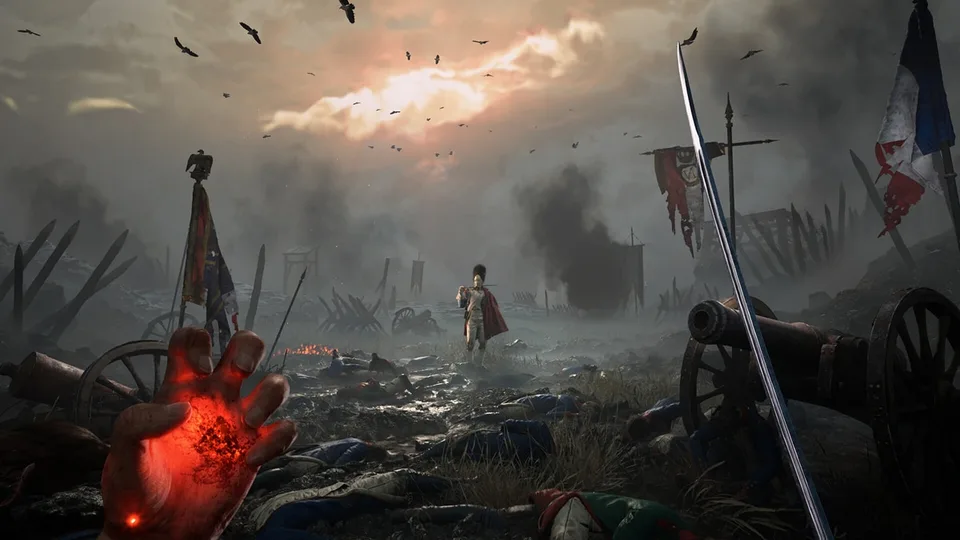
When diving into a new Souls-like experience, understanding the developer's background and the game's setting helps set proper expectations. Developed by One More Level, known for their previous work on Ghostrunner, Valor Mortis brings a unique blend of historical fiction and dark fantasy to the first-person perspective. Players step into the boots of a soldier in Napoleon's army who wakes up on a battlefield grave, endowed with strange transmutative powers.
According to Steam Store Page, the game carries mature content warnings due to its brutal, war-torn landscape and visceral violence. Rather than relying on generic fantasy tropes, the narrative intertwines real-world historical conflicts with the creeping dread of the Crimson Plague, turning the European continent into a breeding ground for grotesque monsters and dark mysteries.
Verify system requirements and age preferences on the official Steam Store Page.
Prepare for a challenging single-difficulty Souls-like structure centered around precise combat and tactical choices.
Keep track of developer updates from One More Level regarding optimization and post-launch patches.
H2: Evolution from Demo Versions to the Full Release
A major talking point among early players and reviewers is how drastically the experience has evolved since the initial demo phases. Early previews highlighted minor issues regarding input timing, movement responsiveness, and general game feel. Fortunately, the development team actively addressed these friction points prior to launch.
In comparison to early builds, the finalized version offers significantly smoother traversal, tighter combat mechanics, and better overall responsiveness. While players could clearly recognize the underlying potential in the demo iterations, the polished retail experience delivers much more fluid movement and cohesive enemy encounters. It serves as a reminder that demo feedback plays a vital role in shaping complex action titles, though players should always evaluate the final product on its own merits.
H2: Combat Mechanics and Strategic Loadouts
As a first-person Souls-like, Valor Mortis approaches combat and challenge differently than traditional third-person action games. The field of view (FOV) is fully customizable via a dedicated slider, helping players maintain spatial awareness during frantic engagements.
Combat revolves around a mix of melee weapons, firearms, and transmutation abilities. Players wield a sword in their right hand while managing firearms and special abilities in their left. To handle enemy pressure, you can choose between two primary defensive philosophies:
Parry Route
Focuses on precise blocking and parrying to drain enemy posture bars, eventually stunning opponents and opening them up for devastating counter-attacks. Synergizes well with specific weapon upgrades and Amber slots that expand the parry window.
Dodge Route
Relies on perfectly timed dodges to temporarily slow down time around you, granting an opening for a massive retaliatory strike against aggressive enemies.
Guns also play a tactical role beyond standard ranged damage. Landing shots on enemy weak points yields a crucial resource called Neftoglobin, which directly fuels your transmutation powers. This creates an active loop where aggressive marksmanship feeds your magical capabilities.
H2: Exploration, Hub Structure, and Progression
Progression in Valor Mortis follows a structured hub-and-spoke design. The main church acts as your central sanctuary, where you can upgrade weapons at the workshop, manage resources, and access various interconnected levels via loading screens.
Unlike traditional open-world titles, the level design leans toward linear missions with subtle Metroidvania-style backtracking. As you unlock new navigational abilities and traversal tools—such as wall-running, swinging from poles, and utilizing environmental verticality—you can return to earlier areas to uncover hidden secrets.
Character progression focuses on direct skill advancement rather than traditional attribute point distribution. Players also collect pieces of Amber, which can be slotted into unlocked slots as you level up, granting diverse passive effects to customize your build for specific playstyles.
H2: Community Insights and Performance Expectations
Early community feedback and reviewer impressions indicate that while the game is relatively compact in length, it maintains a brisk and engaging pace. Because the game utilizes a singular difficulty setting, encounters demand attention to positioning and enemy telegraphs.
Tip
Managing Off-Screen Threats: Because the game is played from a first-person perspective, keeping track of enemies behind you can be challenging. Pay close attention to on-screen warning indicators that alert you to incoming attacks from your blind spots.
Players should expect minor technical hiccups common during launch windows, such as occasional frame stuttering or getting pushed into environmental geometry by blocking enemies. However, community reports highlight that the overall performance remains stable, and the fast-paced movement mechanics elevate exploration beyond standard dungeon crawling.