Valor Mortis Meaning: Unraveling the Dark History and Lore
Discover the dark historical roots, alternate timeline, and thematic meaning behind Valor Mortis, the first-person Souls-like by One More Level.
Published: Valor Mortis Wiki Editorial Team
Table of Contents
Deconstructing the Title: What Does Valor Mortis Mean?
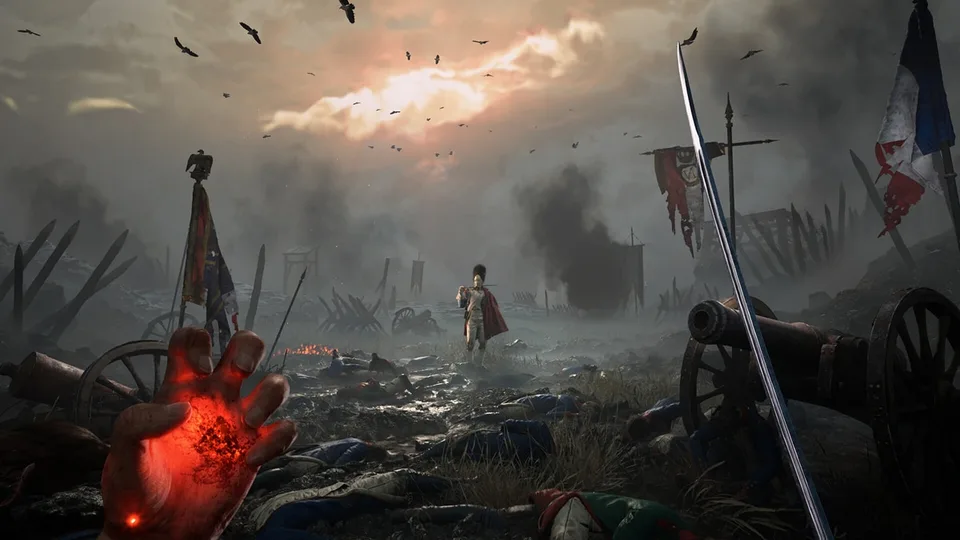
When diving into a new narrative-driven game, understanding the title provides the first major clue about its thematic core. In Latin, Valor translates to strength, worth, or courage, while Mortis relates to death. Put together, the phrase points directly to a world where human worth is measured entirely by survival, and where death is not a permanent end but a manipulated resource.
Developed by One More Level—creators of the fast-paced cyberpunk action in Ghostrunner—this title signals a stark departure from traditional medieval fantasy. Instead of wandering through fictional kingdoms like Lordran or the Lands Between, players step into an alternate version of early 19th-century Europe. Here, the brutal realities of Napoleonic warfare collide head-on with dark alchemy and supernatural horrors.
According to community lore breakdowns and official trailers, the historical backdrop is grounded in the twilight of Napoleon Bonaparte's empire. However, the introduction of a mysterious, blood-derived substance known as Nephtoglobin twists historical accuracy into a grim nightmare. The title thus encapsulates the entire premise: the military might ("valor") of an unstoppable army fueled by the macabre powers of death ("mortis").
Historical Foundations and the Napoleonic Shift
To truly grasp the narrative weight of the game, players must look at how real history bleeds into the fiction. The visual design of enemy uniforms and settings draws heavily from the eastern front of early 19th-century European campaigns, specifically mirroring Russian military aesthetics.
Based on community lore analysis, the story heavily incorporates major figures and military structures from this era:
La Grande Armée: Napoleon’s famed military machine is reimagined not just as a tactical force of men, but as an undying legion.
The Imperial Guard: Historically consisting of battle-hardened veterans fiercely loyal to Bonaparte, the game introduces the "Eternal Guard"—soldiers sustained beyond mortality.
Key Campaigns: The narrative explores the tragic fallout of historical turning points, such as the disastrous invasion of Russia and the ultimate clash at Waterloo.
Rather than sticking to strict historical textbook events, the game posits a dark "what if" scenario. What if a desperate Napoleon, grieving personal tragedies like the loss of his beloved Joséphine, sought forbidden knowledge to conquer death itself?
Tip
Lore Hunting Tip: Pay close attention to enemy attire and environmental details in trailers. The architecture and military equipment offer subtle hints about how far Napoleon's campaign deviated into the supernatural before corrupting into a full-scale plague.
The Mythos of L'Homme Rouge and Egyptian Alchemy
The supernatural catalyst driving the game's dark fantasy elements traces back to well-documented folklore surrounding Napoleon. Historical accounts from his 1798 Egyptian campaign gave birth to rumors about L'Homme Rouge—the "Little Red Man of Destiny"—a spectral entity said to have appeared to Bonaparte in the desert to offer guidance and military glory.
In the universe of this first-person Soulslike, this myth evolves into something far more sinister. The core substance corrupting the world, Nephtoglobin, offers linguistic and thematic clues to its origins:
The suffix -globin points directly to biological blood components like hemoglobin.
The prefix Nephto- connects to Nephthys, the ancient Egyptian goddess associated with night, death, and funerary rites.
This Egyptian connection bridges the gap between historical esotericism and dark fantasy. During his campaigns, Western alchemy—deeply rooted in Hellenistic Egypt—became a focal point of esoteric fascination. In the game's lore, Napoleon's signet ring likely acts as an alchemical seal, serving as the physical instrument that allows him to control his fallen, plague-ridden troops.
Gameplay and Combat Philosophy: First-Person Soulslike
Shifting the Souls-like genre from a traditional third-person perspective to a first-person viewpoint introduces a completely new learning curve. Even veterans of parry-heavy combat will find themselves needing to adapt to spatial awareness and enemy telegraphs from a grounded, eye-level perspective.
According to early community guides and player experiences from IGN's tactical breakdowns, mastering the mechanics early is essential for survival:
Mastering Combat Basics
Prioritize the Parry: Parries do not feature flashy visual signifiers; you must time your block precisely to the incoming strike to stagger enemies and open them up for ripostes.
Exploit Weak Points: Just like fighting monsters in survival horror games, shooting or stabbing specific weak points—such as explosive bomb bags on Risen Grenadiers or enemy heads—deals massive damage and disables hazards.
Manage Resources Wisely: Collect floating purple orbs to refill your Nephtoglobin bar, which fuels powerful abilities like Fire Transmutation to burn through blocked paths and singe foes.
Utilize Fast Travel: Once you unlock the Abandoned Church base of operations, use Lanterns to fast-travel back to side-quest locations and upgrade stations without retracing all your steps.
Weapon and flask management also demand patience. Players are advised to hold onto early upgrade materials rather than spending them immediately on starter weapons, as a broader arsenal of swords, guns, and abilities unlocks shortly after leaving the initial outposts.
FAQ
Is Valor Mortis connected to Ghostrunner?
While the game takes place in an entirely different genre—a first-person Soulslike rather than a cyberpunk parkour game—it is crafted by the same developer, One More Level.
How does magic work in the game?
Players utilize abilities called Transmutations, which are fueled by Nephtoglobin (represented by a purple meter). These powers allow you to manipulate fire, clear blocked areas, and deal elemental damage to enemies.
What is the significance of the protagonist's background?
The protagonist, William Dowsett, bears an English name and speaks French with a degree of unfamiliarity, suggesting he was an outsider or volunteer drawn into Napoleon's ranks before the crimson plague utterly corrupted the campaign.